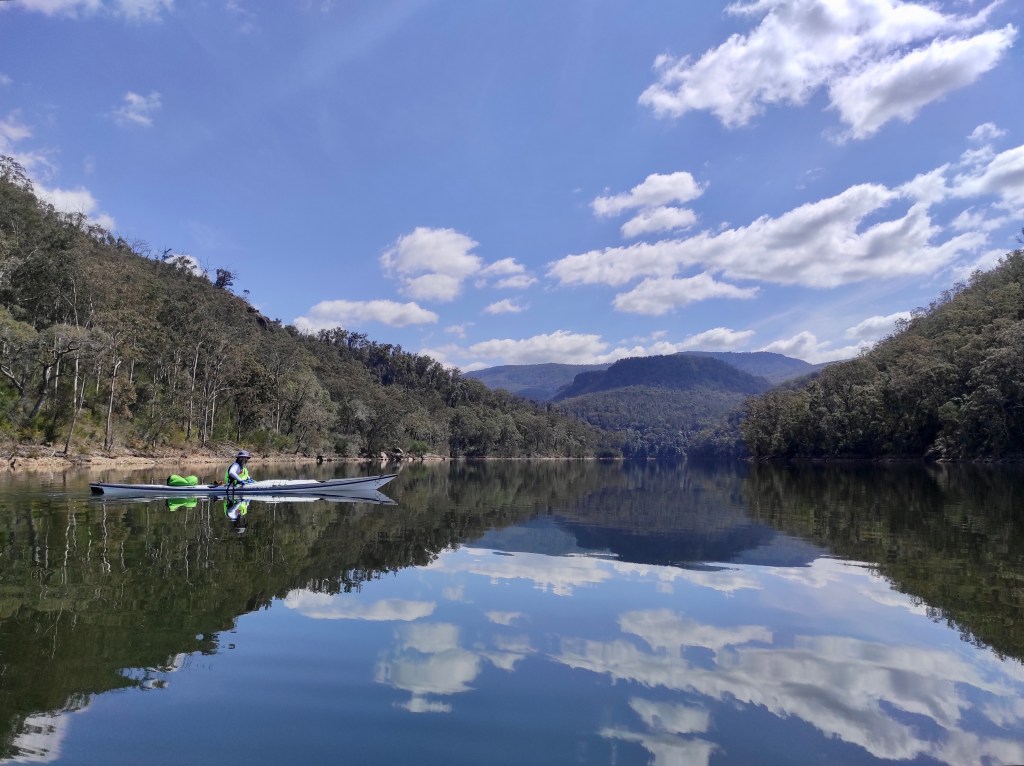
Just four months ago, the NSW Central Coast was where I kayaked, and camping was most definitely not my thing. Fast forward to a couple of weeks ago, and I’ve camped three times – twice by kayak – and I’ve been north, paddling on the NSW Mid-North Coast, and south, to the state’s Southern Highlands.
Located two hours south of Sydney, is the massive Morton National Park, the traditional country of the Yuin people. And nestled in the centre of this – not too far from the regional towns of Bowral, and Mittagong – is the 1970s constructed Tallowa Dam, marking the confluence of the Shoalhaven and Kangaroo Rivers and creating Lake Yarrunga.
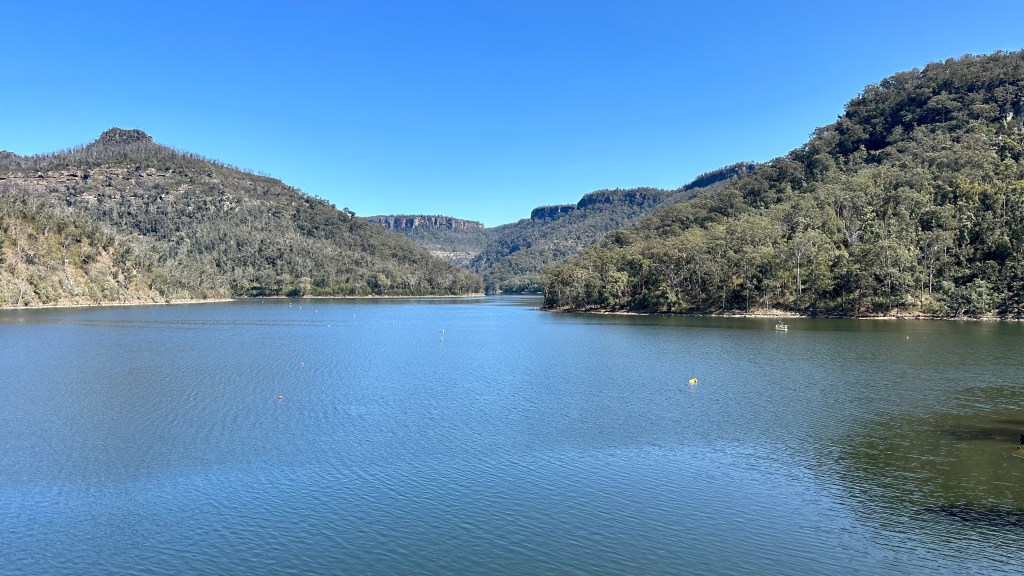
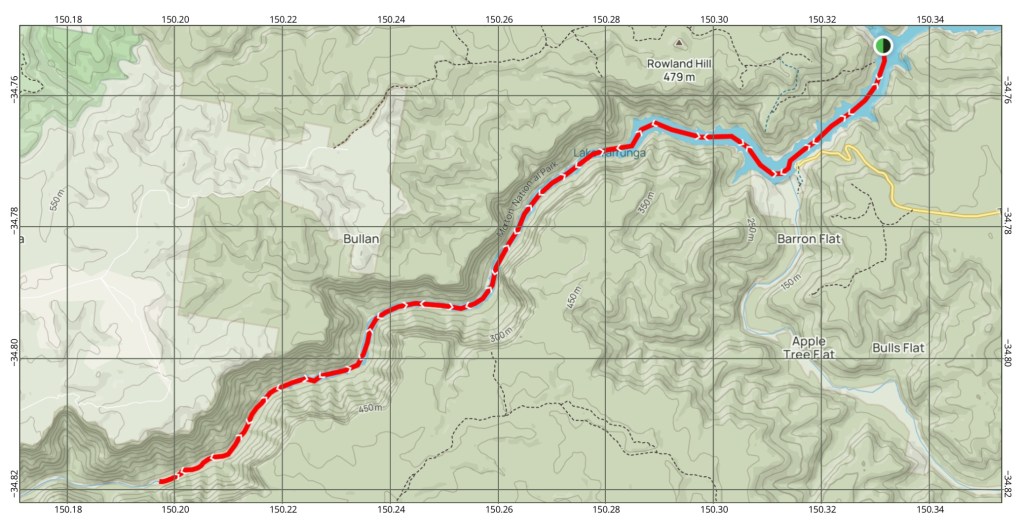
From the lake above the dam, the Shoalhaven River to the west is flatwater with negligible flow and navigable for approx. 15km. Likewise, the Kangaroo River to the east, which is navigable a little further, approx. 21km. Downstream of Tallowa Dam, the Shoalhaven river is fast flowing, running south, then through Nowra and finally out to sea at Shoalhaven Heads into Shoalhaven Bight.
Planning the trip was more tricky than I’d expected, as although there are numerous campsites on this river system, working my way around the NSW Parks & Wildlife website’s booking and information pages was more challenging that it should be.
In short, all of the campsites operate on a first come-first served basis. However, so that numbers can be managed, you are required to make a booking for staying at any of the national park campsites on Lake Yarrunga: Shoalhaven River (to the west), and a separate booking for staying at any of the campsites on Lake Yarrunga: Kangaroo River (to the east). Bookings are free, but there is a $6 booking charge. I had made a booking on both river sections although, ultimately, we only stayed on the Kangaroo River section – and fortunately for us, we found every campsite we encountered to be completely vacant, despite us staying during a school holiday period.
Another source of confusion was the naming of the campsites, with signposts on the ground not always matching the naming on the NSW Parks & Wildlife website. For example, the interactive map on the website (and also Google Maps) shows the ominously named ‘Fly Land’ campsite as being the first campsite on the Shoalhaven River, upstream from Tallowa Dam. Yet, on the downloadable .PDF map, and at the campsite itself, this campsite is named ‘Tom’s Gully’ – which makes sense given that the little creek that runs down the hills at that point is also labelled as ‘Tom’s Gully’. And the same applies to ‘Tallowa Dam’ campsite, named on the ground as ‘Sawyers’. You are also minded to check the website for campsite closures, where some campsites may be closed due to fire damage or flood debris.
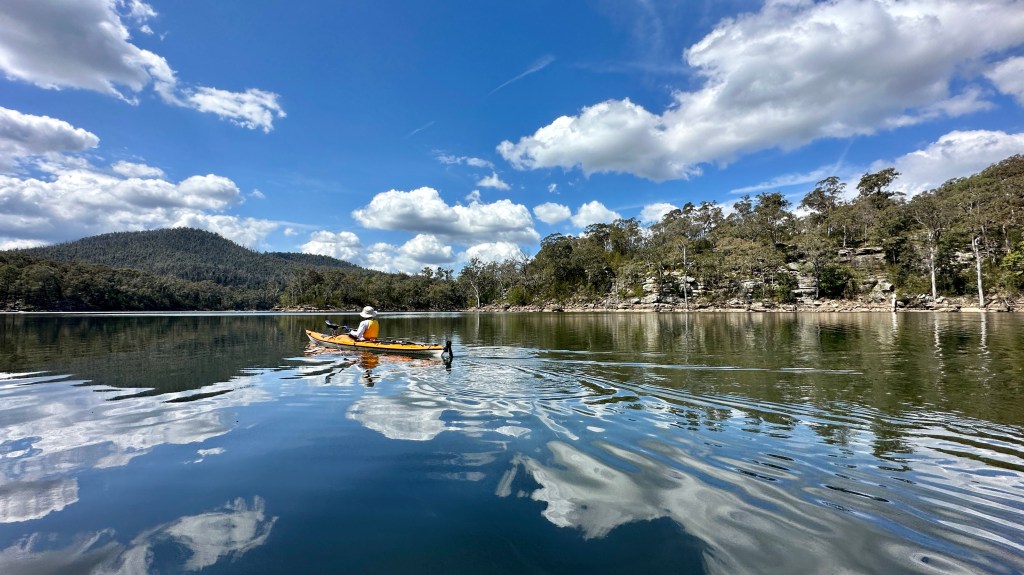
After a three hour drive down from the NSW Central Coast, stopping-off in Bowral for a quick coffee and delicious lemon muffin (from Primary Espresso), we arrived at Tallowa Dam at about 9.30am. We unloaded the kayaks and all our camping gear at the top of the boat ramp in the Tallowa Dam picnic area, then left the car in the car park of the well-facilitated picnic area. An hour later, we were enjoying effortless paddling on the Kangaroo River – albeit somewhat more heavily laden than usual – heading for our chosen campsite.
Heading east, we paddled leisurely up the Kangaroo River, keeping an eye out for any-and-all campsites, passing first ‘Sundeck’ then ‘Sawyers’, both sign-posted as ‘Closed’, paddling about 7km upstream to the junction with Yarrunga Creek where ‘Beehive Point’ and ‘Tigersnake’ campsites are located. Beehive Point campsite is accessible by road and so we were not minded to pitch up at what we thought might be a less peaceful site. Jumping out of the boat to inspect ‘Tigersnake’, not otherwise visible from the water (common to several campsites!), I encountered yet another ‘Closed’ sign – but also a gang of NSW Parks & Wildlife workers felling and clearing fire-damaged trees. They advised that, provided we’d made campsite bookings, we were good to stay at any of the campsites – so back to Sawyers we headed!
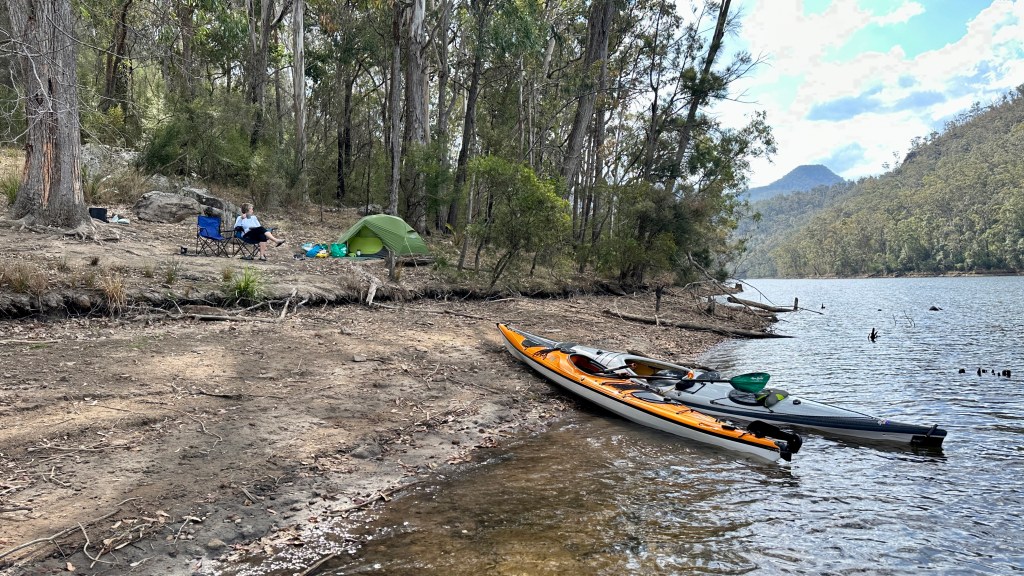
‘Sawyers’, like several of the campsites along both stretches of river, is equipped with a long drop toilet – but not much else! Some areas of hard (and I mean hard!) packed earth marked where tents could be pitched, and a ring of stones and some burned logs indicated where previous tenants had enjoyed the all-essential camp fire, but that was it as far as amenities went. And we were perfectly happy with that! Facing east we could enjoy the sunrise, had our own personal strip of sandy beach providing a soft landing for the kayaks – and a place to swim and bathe in the freshwater of the river. We also had, so far at least, the park to ourselves for at least a 2km radius!
We’re still evolving our approach to kayak-camping, by which I mean we’re still working out what we don’t need to bring! Both kayaks were pretty heavily laden, although this wasn’t helped by us bringing two 10L canisters of drinking water. The car was parked just a few kilometres away so we were able on this trip to leave some of our provisions there, knowing we would pass by there twice the next day. Still, it’s a work-in-progress while we progressively weed-out non-essential equipment from our equipment lists.
Early afternoon, and after pitching the tent and enjoying our first camp meal, we headed out to explore Broughton Creek which extends north from Sawyers for about 7km. This gave us our first experience of the flooding caused by the damming of the valley 40 years earlier, with the remains of massive gum trees poking their skeletal tips skyward through the river’s mirror-like surface – but creating a multitude of sub-surface kayak hazards!
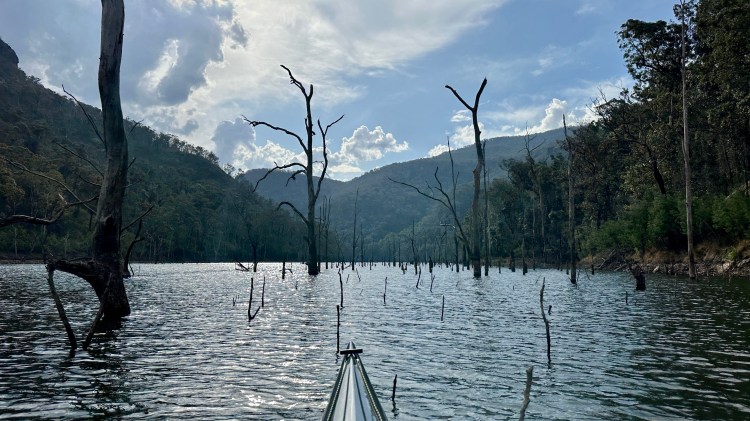
Returning to the campsite late afternoon, with the last of spring’s evening light, it was really easy to gently paddle the kayaks up onto the sandy strip at the base of our beachfront real-estate.
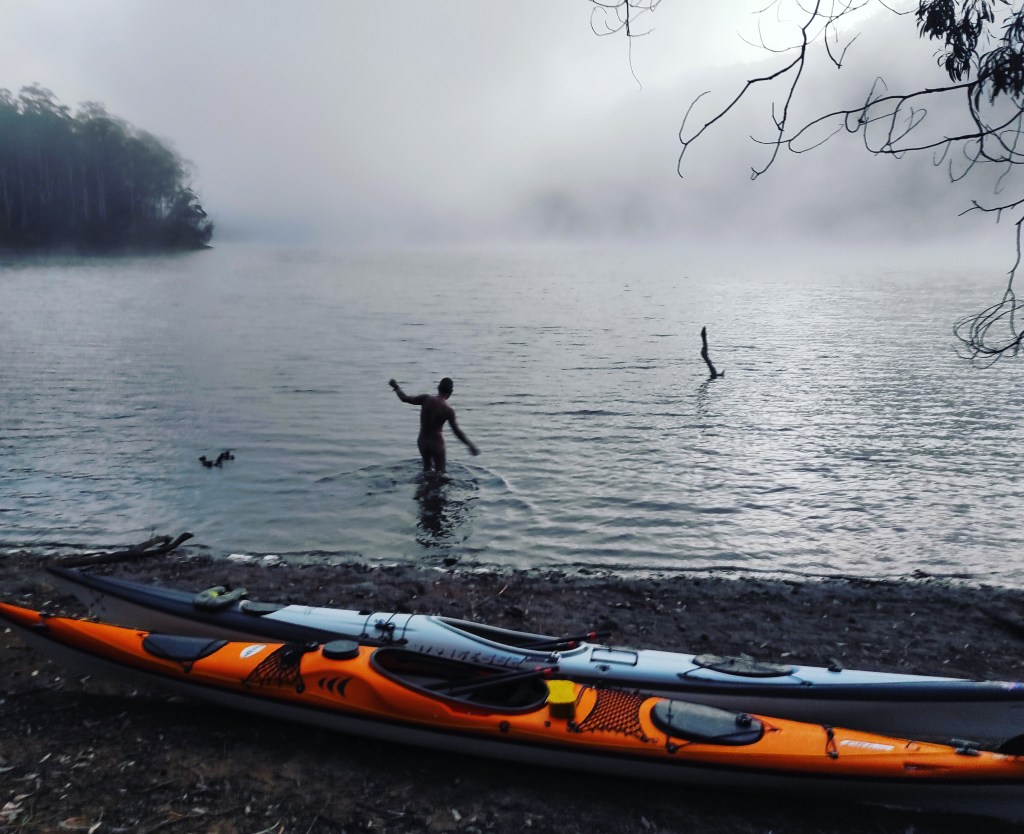
Dinner, not-a-campfire-as-there-was-a-solid-fuel-fire-ban, and a fair night’s sleep, saw us up early the next morning. With first-light brightening the tent, I was up and straight into the water for a morning dip before breakfast. Used to the salt water of the NSW Central Coast, having water I can paddle on, swim in, wash in and drink was a refreshing change in every sense!
Washed and clean, full-up on a camp breakfast of porridge, honey and berries, the main event of this trip lay immediately ahead – paddling the full length of the Shoalhaven River upstream of the dam, and through the Shoalhaven Gorge.
Our 7.30am start was met with mild and cloudy conditions, threatening to spoil the photos and GoPro videos we were planning to take that day, but with no rain and only a light breeze forecast, we weren’t complaining.
We paddled the 2km back downstream along the Kangaroo River from our Sawyers campsite, and then cut across the back of Tallowa Dam along the yellow warning marks, using the opportunity to fully take-in this construction.
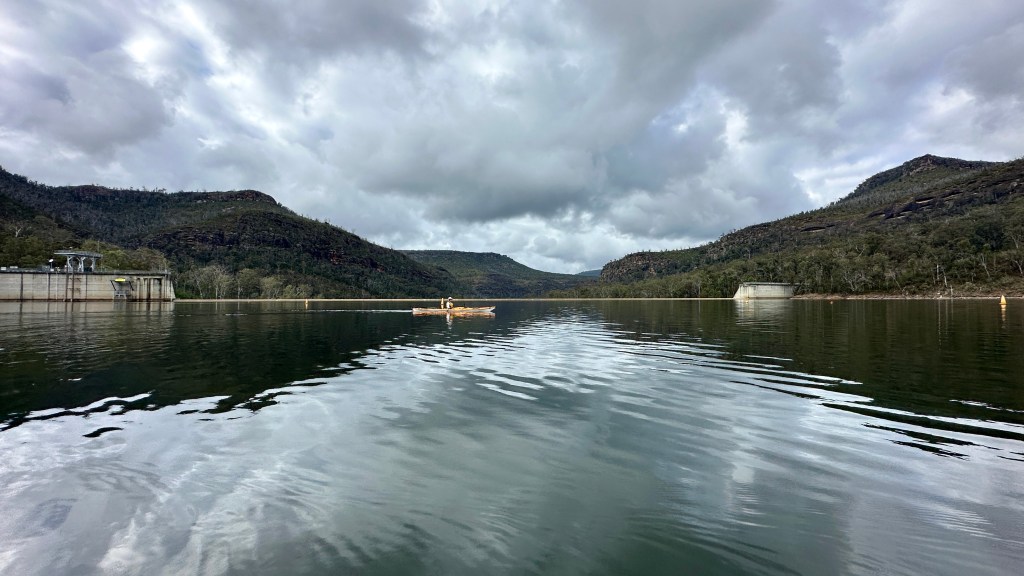
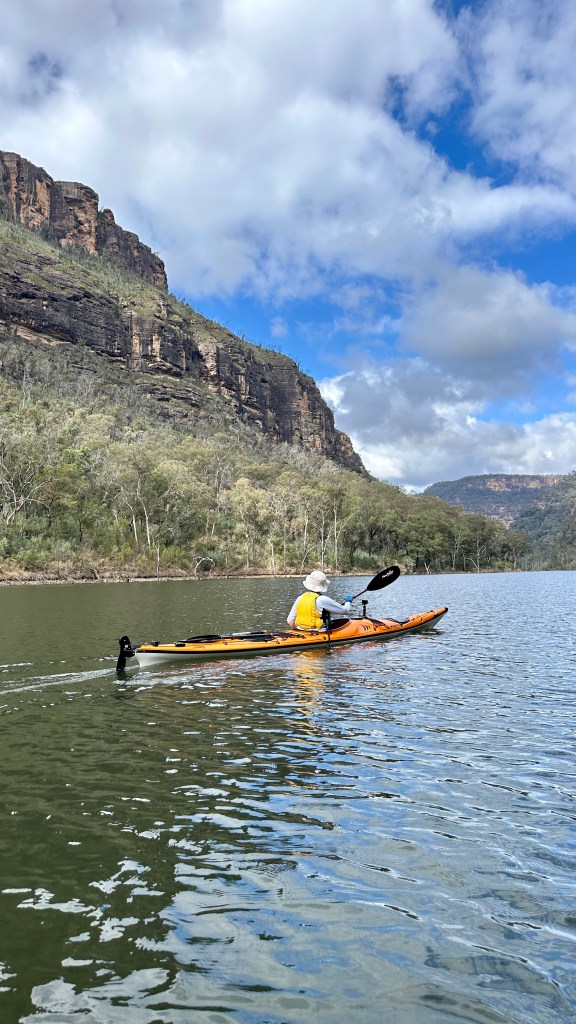
From what we’d seen of the Kangaroo River, it looked to be a fairly open river environment and paddling experience, but already on the Shoalhaven River we were getting a feel for the steep sided gorges that we’d soon be encountering – map contours indicating gorge sides in excess of 250 metres and high points of 400 metres!
And, thankfully, the skies were clearing too, with the sun increasingly brightening the water to a beautiful deep green and lighting up the sandstone and rocky landscape seemingly reaching out of the river skywards and pushing the clouds away for us.
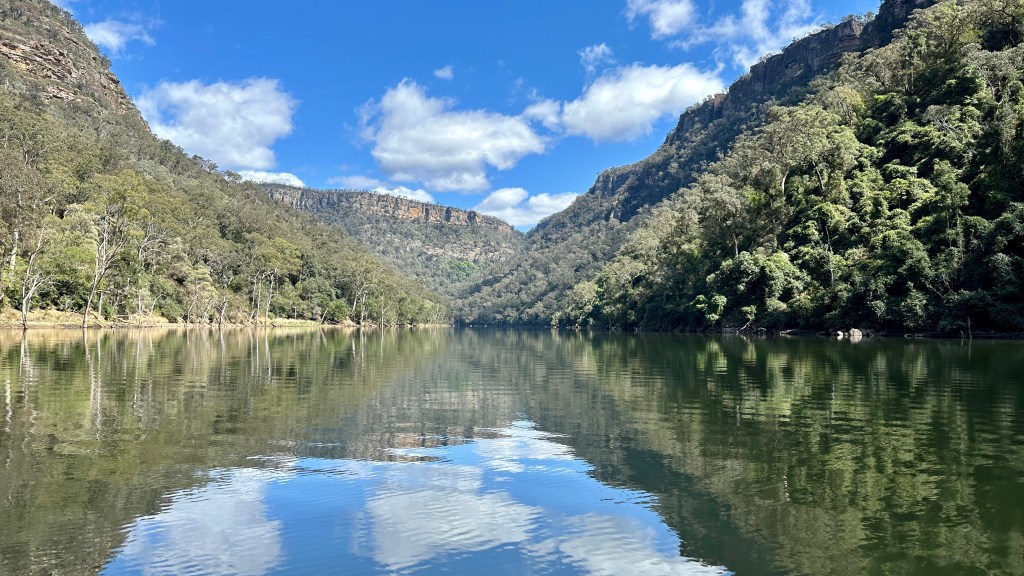
Following the river upstream and enjoying the perfectly calm, flat and almost current-less waters, the banks slowly begin to close-in, and the waterway becomes more winding, adding to the sense of mystery created by this Jurassic-looking landscape.
The campsites listed on the NSW Parks & Wildlife map are tricky to spot, a couple of which we only spotted on the return leg when their signs were more visible from the opposite direction. Each of the campsites we came across had only several areas suitable for pitching tents, and my concern at camping along these two waterways in busier, summer months, would be having to keep moving-on from one campsite to the next until finding a vacant lot. That said, there are many, many perfect spots along the spectacularly scenic shores of both the Shoalhaven and Kangaroo rivers where one could easily set up camp – provided you didn’t mind risking the possible wrath of a parks ranger!
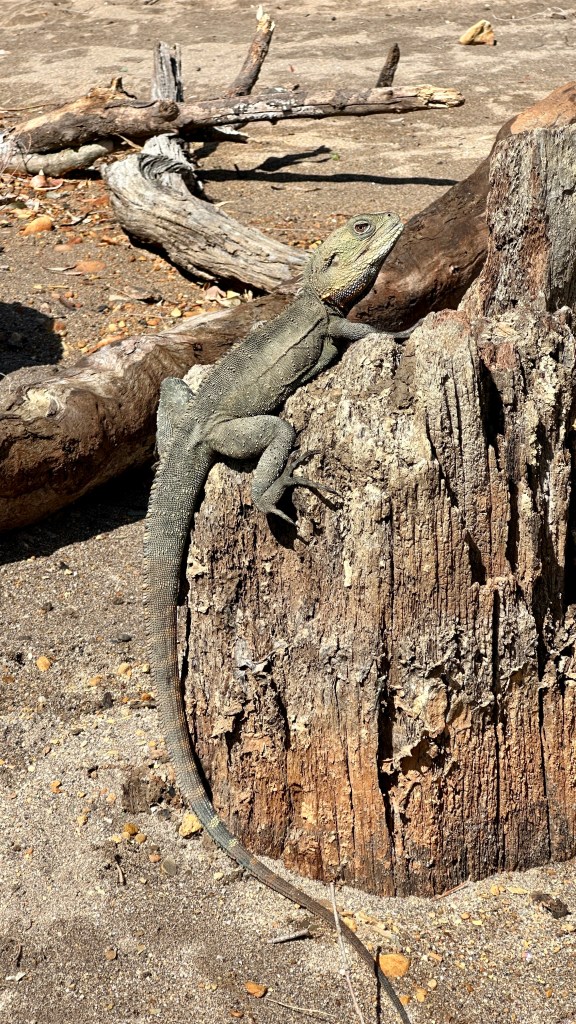
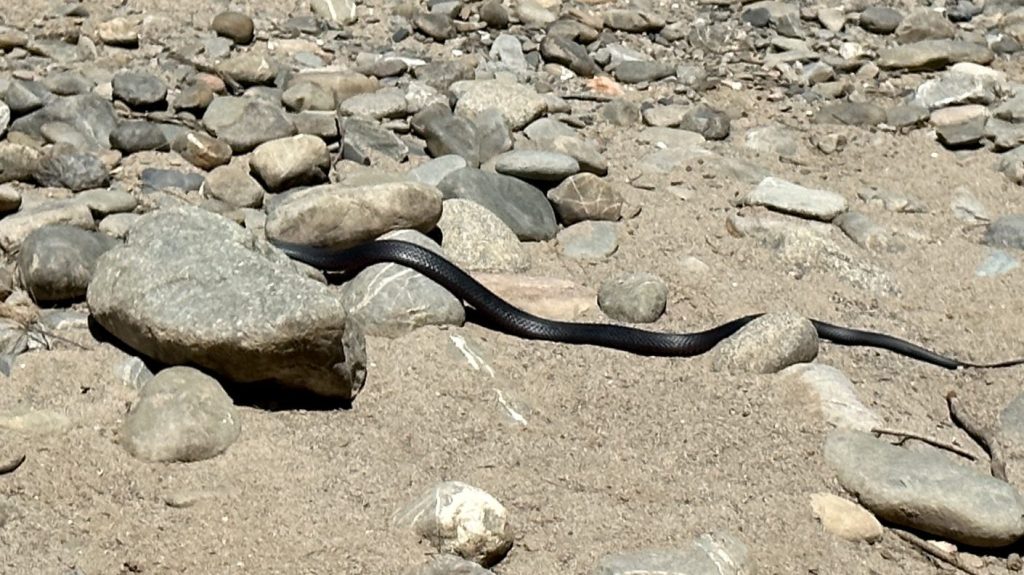
One thing about this stretch of water that made us glad we’d selected a campsite on the Kangaroo River, was the prevalence of some of nature’s ‘wilder’ wildlife. Whilst the many, many water dragons we encountered – either sunning themselves on rocks and fallen trees stretching out into the water, or swimming like Olympic athletes – were a delight to observe, less welcome were their reptilian cousins in the serpentine family. I was most happy that the red-bellied black snake we saw slithering along the shoreline preferred the warm and rocky shore of the Shoalhaven River, rather than the sandy strip of beach by our tent on the Kangaroo River.
Fossickers Flat marks the end of the kayak-navigable stretch of the Shoalhaven River. A series of shallow rapids prevents any further upstream progress, but an amazing ‘lagoon’ is formed at this point. With the sun now blazing down from directly above, this was a perfect time and the perfect location to enjoy lunch, a swim – and take in the absolute peace, quiet and solitude of this remote and totally unique location.
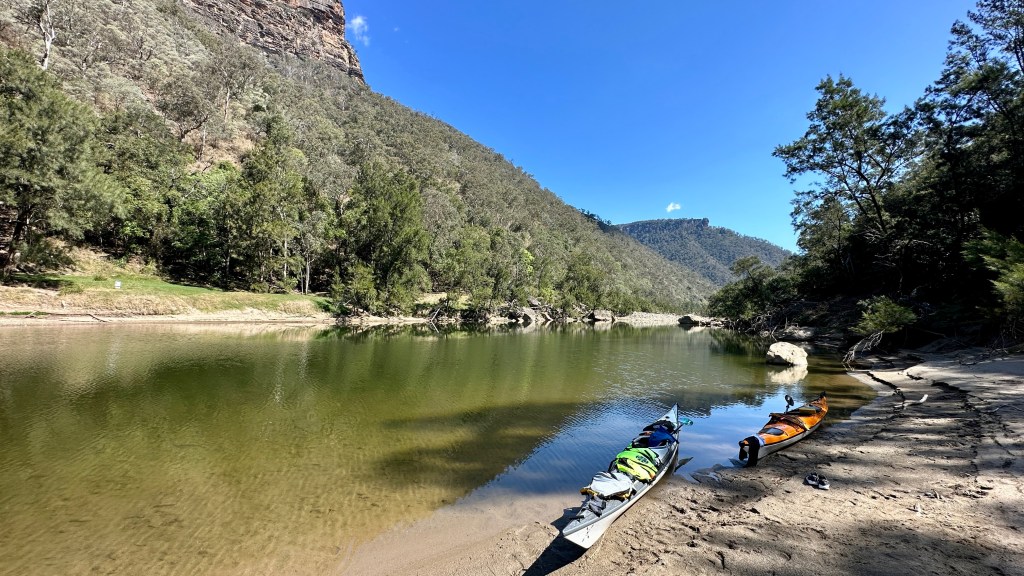
Ordinarily, I find the return-leg of a paddle to be much less interesting than the out-bound leg – a combination of ‘seen this already!’, and ‘are we back at the car yet?’. Not so on this trip though! Everything seemed to be as though we were seeing it for the first time, with the changing position of the sun in the now clear skies, illuminating the sheer rock faces with that special, Australian warm-sun glow – the intense colours of earth, water, bush and sky all complementing each other.
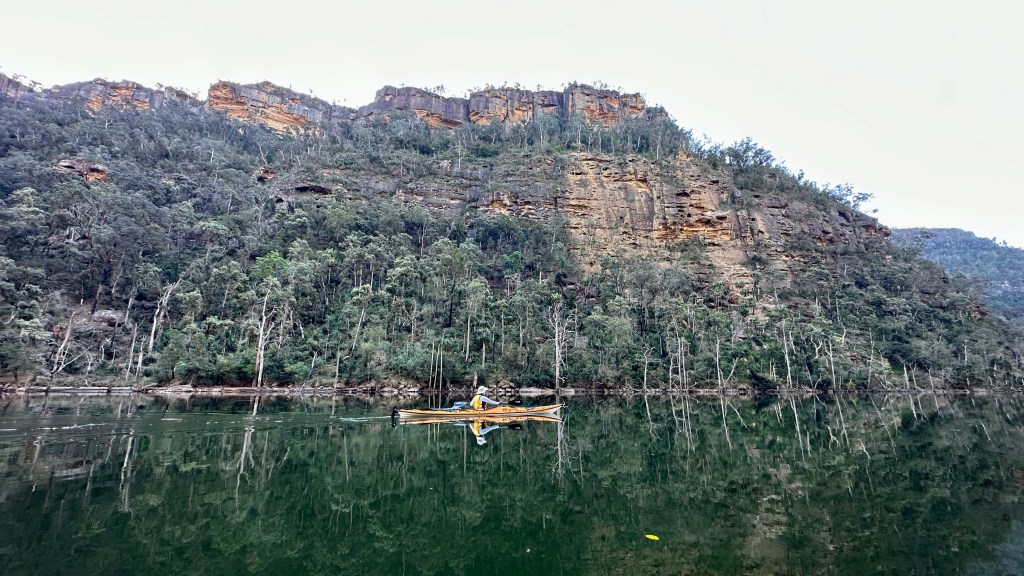
The entire three day/two night trip was centred around paddling this stretch of water – and each-and-every one of the 30km or so we had paddled were worth it. We still had one night of camping to enjoy, but as we completed the final stretch of the day, passing back past the dam, we were immensely satisfied with the experience of the day.
All day we’d seen just a couple of other paddlers, and to all intents and purposes we’d had the whole gorge completely to ourselves. I think we could plan fifty repeat trips and not encounter such ’emptiness’ – we’d been very fortunate and we knew it. However, we still had the length of the Kangaroo River to explore, so we would definitely be back, probably sooner rather than later.
The next morning we’d be breaking camp early and hitting the road home, but in that moment, in that place, we knew we had truly experienced the feeling that only kayaking brings; a sensory mix of the sights, sounds and smells of beautiful waterway, staggering scenery and an inner peace that the tranquility of remote Australian countryside brings.
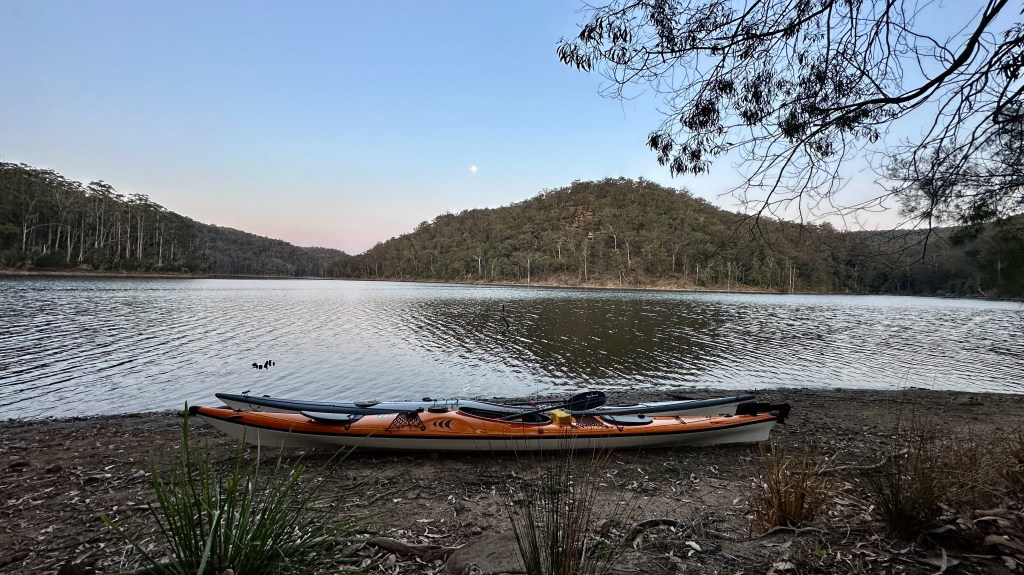
If you’ve never camped, kayaked – or kayak-camped – before, there’s no better place to start. And if you have, well, make sure the Shoalhaven and Kangaroo rivers feature on your kayaking bucket-list!
 Get Kayaking on the Central Coast
Thanks for your account. So interesting. Love to know what food you packed for two nights, 3 days.
LikeLike
We always cook a chicken/rice dish – takikomi gohan – the day before which we eat the first night (warmed up in a pan). Second night is pasta, sauce in a jar and chorizo sausages fried in a pan (all mixed in together). We take lots of eggs, cured meat and cheese. We also take UHT/long-life milk. Coffee, coffee, coffee! And don’t forget the wine!
LikeLike